Key Takeaways
- Routine maintenance and cleaning help prevent unnecessary breakdowns and excess energy use.
- Unit placement and inventory organization influence system workload and effectiveness.
- Switching to energy-efficient equipment can yield serious savings over time.
- Temperature monitoring and employee training are essential to maintain consistency and avoid waste.
- Adopting technology and preventive maintenance ensures ongoing performance and system health.
Finding ways to optimize commercial refrigeration efficiency is increasingly important for business owners aiming to control costs and reduce environmental impact. Energy expenses often account for a significant portion of operational budgets in industries that rely on refrigeration units. By applying a range of practical measures, businesses can ensure their systems deliver peak performance and savings. Getting support from professionals in commercial HVAC repair can also boost long-term equipment reliability and improve day-to-day efficiency.
As energy costs and environmental regulations evolve, investing time and resources into refrigeration management is vital. Efficiency upgrades extend equipment lifespan and contribute to a business’s sustainability goals. Knowing where to start and how to maintain best practices helps managers achieve a measurable return on their efforts.
Developing a comprehensive refrigeration efficiency strategy will not only save money but also improve compliance with environmental standards. For larger facilities or more complex upgrades, consulting reputable industry guides, such as those from the U.S. Department of Energy’s Better Buildings Solution Center, can provide valuable insights for creating a tailored action plan.
Regular Maintenance and Cleaning
Continuous maintenance is foundational to an efficient refrigeration system. One of the leading causes of performance decline stems from dust and grime buildup on condenser coils. Dirty coils force compressors to operate longer and harder, increasing energy consumption and the risk of costly equipment failure. A recommended schedule for coil cleaning is every three months, but high-traffic commercial kitchens may benefit from more frequent attention.
Door seals also demand close inspection. Even small cracks or gaps allow cold air to escape, forcing the compressor to compensate. By promptly checking and replacing worn seals, operators can prevent energy loss before it becomes a problem.
Optimal Placement and Organization
Positioning refrigeration units away from direct sunlight, kitchen stoves, and ovens helps prevent excessive strain on the system. If units are kept near heat or in poorly ventilated spaces, internal temperatures will fluctuate more, and compressors will work harder. Allowing at least a few inches of space around each unit ensures proper ventilation and steady cooling performance.
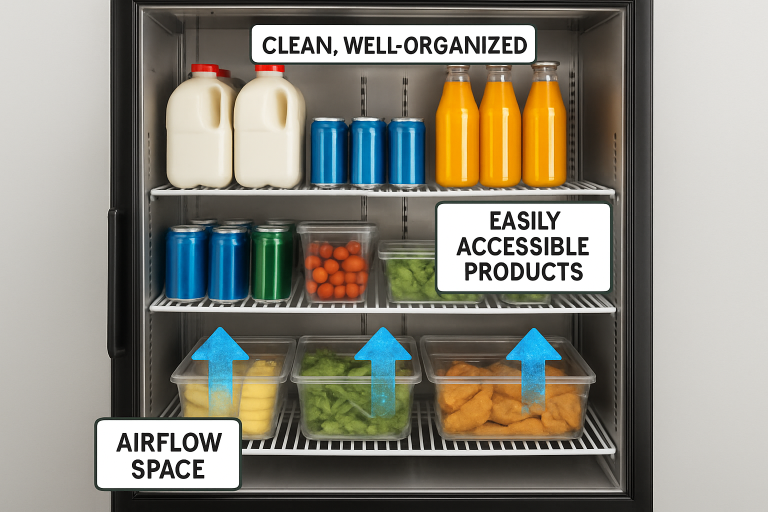
How products are stored inside refrigeration units matters too. Overloaded shelves or poorly spaced items block airflow, creating uneven temperatures and putting contents at risk. By keeping shelves organized with space for airflow, businesses help the cooling system maintain its set temperature more efficiently.
Upgrading to Energy-Efficient Equipment
Older refrigeration systems often lack updated energy-saving technology. Upgrading to models with high Energy Star ratings, variable-speed compressors, and adaptive defrost controls can dramatically reduce long-term energy costs. These units automatically adjust power based on load and operation, ensuring energy is not wasted during off-peak periods. While such upgrades require upfront investment, the reduction in utility bills and maintenance costs can offset initial expenses over time. According to Energy.gov, businesses that upgrade to Energy Star-certified commercial refrigerators can save hundreds of dollars on annual energy bills and reduce greenhouse gas emissions.
Temperature Monitoring and Control
Precise temperature control safeguards perishable goods and controls operational costs. Many facilities set systems colder than necessary, unaware that this results in wasted energy and accelerated mechanical wear. Instead, operators should refer to industry standards for recommended temperature ranges and invest in digital monitoring systems for real-time feedback. These systems can send alerts when temperatures move outside the optimal zone, enabling immediate action and protection against major losses.
Employee Training and Awareness
Well-trained employees are essential for reinforcing refrigeration best practices. Training should cover loading techniques that do not obstruct airflow, the importance of limiting door openings, and recognizing early signs of malfunction, such as uncommon noises or temperature fluctuations. When staff understand their impact on equipment efficiency, they can help extend system longevity and prevent avoidable breakdowns.
Utilizing Advanced Technologies
Integrating tools such as cloud-based monitoring and smart controllers provides deeper insight into refrigeration performance. These technologies enable managers to track temperature trends and respond to anomalies before they disrupt operations. Automated alerts on temperature drift, power interruptions, or maintenance needs support proactive problem-solving and minimize downtime.
Implementing Preventative Maintenance Programs
Establishing a scheduled preventative maintenance program is one of the best ways to ensure system longevity and stable performance. Qualified technicians can identify and repair minor issues before they escalate into major failures. Regular inspections, performed quarterly or biannually depending on usage, should include checking refrigerant levels, testing thermostat accuracy, tightening electrical connections, and evaluating overall equipment health.
Conclusion
Building a strategy around regular cleaning, thoughtful equipment placement, staff education, and technology adoption creates reliable, efficient commercial refrigeration systems. Each practice supports lower operational costs, reduced energy consumption, and a stronger commitment to sustainability. By consistently applying these best practices and seeking professional support for complex work, businesses can protect their investments and environmental footprint for years to come.