Key Takeaways
- Solar panels produce electricity during daylight hours, while batteries can save available energy for later use.
- An EV charger can be one of a home’s largest electrical loads, so it should be included in early system planning.
- Smart controls can coordinate solar production, battery charging, household demand, and vehicle charging.
- The right system size depends on household routines, electrical capacity, backup priorities, and local utility rules.
- A phased installation can be practical when homeowners plan for compatibility and future expansion from the start.
Why Integrated Home Energy Planning Matters
Homes are using electricity in more ways than before. An electric vehicle, heat pump, induction range, electric water heater, and battery system can all change how much power a household needs and when it needs it. Planning these upgrades separately can create avoidable conflicts, particularly when several large loads run at once.
A connected plan helps a household produce, store, monitor, and direct electricity according to real needs. Homeowners considering solar, storage, or charging equipment can begin by reviewing options through https://gtconstruction.solar and comparing their current energy use with future goals. The objective is not to install as much equipment as possible. It is to create a reliable system that fits the home, lifestyle, and budget.
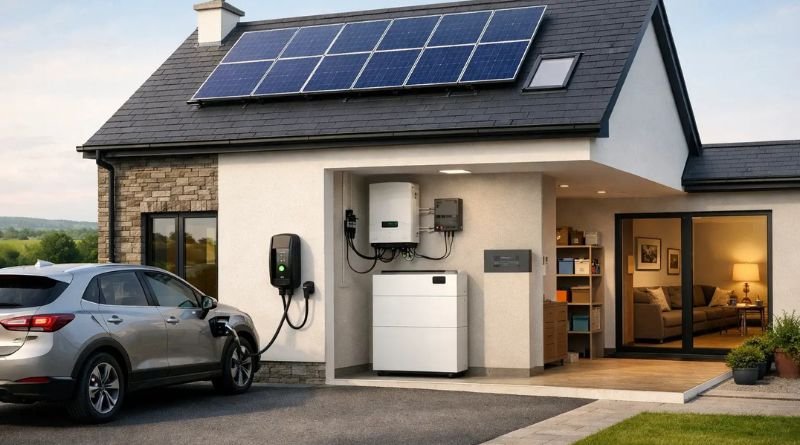
What Each Part of the System Does
- Solar panels convert sunlight into electricity that can serve active household loads.
- Home batteries store electricity for use later, such as during evening hours, high-rate periods, or qualifying outages.
- EV chargers deliver electricity to a vehicle and may add substantial demand to the home’s electrical system.
- Inverters convert and manage electricity so solar, batteries, the home, and the grid can operate together.
- Energy monitoring tools show production, consumption, battery status, and charging activity.
How Power Moves Through a Typical Home
During the day, solar generation can first serve appliances, lighting, cooling, and other active household loads. When production exceeds demand, the remaining electricity may be exported to the grid, stored in a battery, or directed to a compatible EV charger. After sunset, the home may draw from the battery or utility grid, depending on system settings and available stored energy.
Research into solar, storage, and controllable devices shows why coordination matters. When a system can shift flexible loads to match solar output or selected utility rate periods, it may increase on-site solar use. Results will vary with local rates, export compensation, household schedules, and equipment capabilities.
Solar Panels and Home Batteries: A Practical Pair
Solar energy is most valuable to a household when it is available when the home needs it. Panels often produce electricity at high levels during daylight hours, while many households use more electricity in the morning and evening. A battery can bridge part of that timing gap by storing energy for later use.
Choose the Battery Goal Before the Battery Size
Battery systems can support several different objectives:
- Using more solar-generated electricity after sunset.
- Reducing purchases during higher-priced time-of-use periods.
- Keeping selected circuits operating during a utility outage.
- Providing smoother management of large household loads.
Where EV Charging Fits Into the Plan
EV charging is flexible because many vehicles spend long periods parked at home, but it can still be a major load. Some drivers can meet routine needs with overnight charging, while others may benefit from faster Level 2 equipment, scheduled charging, or solar-aware charging settings. The U.S. Department of Energy notes that home charging commonly uses Level 1 or Level 2 equipment, and that a qualified electrician can determine whether the home has adequate capacity for vehicle charging equipment.
A useful charging plan considers daily driving distance, vehicle battery size, available time at home, seasonal travel, and the charger’s power level. Smart charging can delay or reduce charging when the home is already using significant power. Bidirectional charging may offer additional possibilities, but homeowners should verify compatibility among the vehicle, charger, inverter, utility requirements, permits, and local code before relying on it.
Smart Controls Can Reduce Energy Conflicts
A home energy management system is the control layer that helps equipment respond to production, demand, schedules, and homeowner preferences. It may prioritize essential household loads, maintain a battery backup reserve, charge an EV during selected hours, or limit charging when heating and cooling demand rises.
For example, solar electricity might power the home first. Available surplus could then charge the vehicle, fill the battery, or be exported under the home’s utility arrangement. Later, the battery could support evening loads. The best controls still give homeowners clear choices, including minimum battery reserve, preferred vehicle departure time, and whether bill savings or outage readiness comes first.
How to Size the System Around Real Life
- Collect at least 12 months of electricity bills to identify average use and seasonal peaks.
- Map when people are home, when vehicles are driven, and when major appliances operate.
- Set primary goals, such as lower grid purchases, backup power, EV charging convenience, or a combination.
- Include high-demand equipment such as cooling, heating, water heating, cooking, and charging.
- Plan for likely future loads, such as another EV, a heat pump, or an addition.
- Ask for an electrical load calculation that considers the panel, breakers, conductors, and service capacity.
Electrical, Backup, and Installation Considerations
Adding solar and an EV charger may require more than a simple equipment purchase. Possible solutions include dedicated circuits, load management, a panel upgrade, smart breakers, or a separate critical-load panel. Permits, inspections, utility interconnection approval, fire requirements, and electrical rules vary by location.
For outage planning, separate essential-load backup from whole-home backup. Refrigeration, lighting, internet equipment, medical devices, and heating controls are common priorities. Central air conditioning, electric resistance heat, dryers, ovens, and EV charging can require far more power. Select the circuits that matter most before comparing battery models.
Common Mistakes and a Better Path Forward
Avoid choosing equipment before reviewing usage, assuming a larger battery always delivers better value, or overlooking roof condition, shading, winter production, and driving habits. Do not assume rooftop solar will power a home during an outage without properly configured backup equipment. Also, ask whether the proposed products can communicate with a single monitoring platform and scale later.
A phased approach can work well. A homeowner might begin with a panel upgrade and EV load management, install solar next, and add storage later. Others may install solar with battery-ready equipment from the beginning. In either case, a complete energy plan helps prevent costly rework and keeps the home ready for its next electrical upgrade.