Key Takeaways
- Major advancements in materials and construction techniques are reshaping the future of masonry.
- Sustainability is becoming foundational to masonry’s evolution, making eco-friendly solutions more accessible.
- Digital technologies are improving precision and workflow efficiency in masonry projects of all scales.
Table of Contents
- Sustainable Materials in Masonry
- Technological Advancements in Masonry
- Prefabrication and Modular Construction
- Design Trends in Modern Masonry
- Structural Innovations and Reinforcement Techniques
- Energy Efficiency and Smart Masonry
- Challenges and Future Directions
Modern masonry is experiencing a profound transformation as the construction industry embraces new technologies, materials, and sustainable design philosophies. Today’s architects and builders are not only addressing structural integrity and timeless beauty, but also optimizing for efficiency and reduced environmental impact. These advancements open new opportunities for collaboration across a variety of allied trades—including those in industrial sectors such as industrial piping company Tulsa, OK—as masonry continues to shape the cities and infrastructure of tomorrow.
The drive toward innovation in masonry is fueled by both necessity and opportunity. Changing energy codes, heightened environmental consciousness, and labor challenges make it imperative that construction processes adapt. Stakeholders are increasingly prioritizing cutting-edge solutions that balance tradition with progress, ensuring masonry remains viable for decades to come.
Sustainable Materials in Masonry
Masonry’s environmental impact is increasingly scrutinized, prompting innovation in sourcing and manufacturing. Sustainable options include bricks with recycled materials like fly ash and ground glass, and carbon-sequestering products that cut the carbon footprint. Local stone sourcing also reduces emissions from transportation. According to the Architectural Digest guide, these eco-friendly alternatives are gaining acceptance in commercial and residential building. Another trend is bio-based binders and cements, which offer similar performance to Portland cement but with less energy and emissions. The use of green roofs, rainwater-absorbing brickwork, and permeable masonry pavements contributes to urban environmental health.
Technological Advancements in Masonry
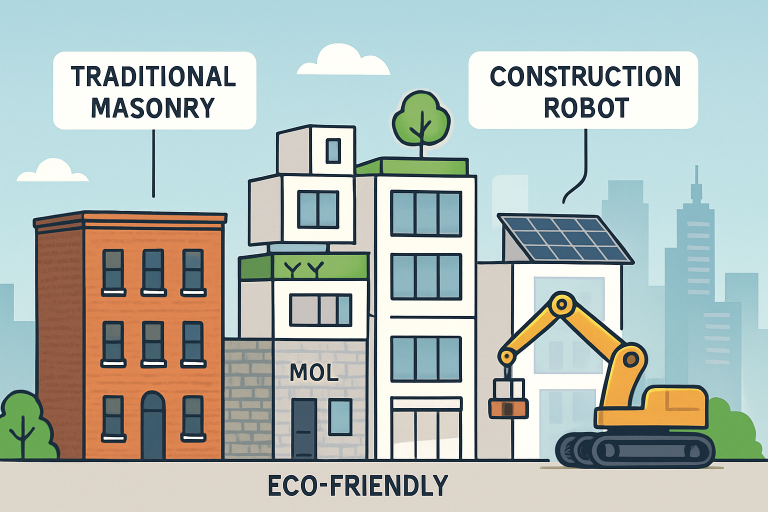
Technology is becoming integral to masonry’s evolution, improving not only efficiency but also quality assurance and worker safety. Drones are now widely used for site surveys and construction monitoring, providing detailed data that guides both design and on-site execution. 3D scanning and modeling software, common in restoration projects, helps teams capture the finest architectural details for replication and documentation. Modern projects may also involve augmented reality (AR), which enhances masonry training and allows teams to visualize projects before any physical work begins. The use of autonomous robots for repetitive bricklaying tasks is also on the rise, mitigating labor shortages and reducing human error.
Prefabrication and Modular Construction
Off-site prefabrication streamlines masonry, yielding dramatic gains in speed and waste reduction. By assembling wall panels and custom components in a controlled factory environment, builders can maintain higher quality standards and minimize disruptions on job sites. Prefabricated and modular construction aligns closely with Design for Manufacturing and Assembly (DFMA) principles, emphasizing standardization and error reduction. Once delivered to the site, these components are rapidly installed, shrinking project timelines and reducing labor costs. This trend is especially pronounced in large-scale projects, such as commercial buildings and multifamily housing, where productivity gains are most substantial.
Design Trends in Modern Masonry
Contemporary masonry design balances tradition and innovation, blending natural aesthetics with modern forms. Clean lines, geometric shapes, and textural contrasts characterize today’s most popular masonry work. The integration of masonry with complementary materials such as wood, metal, and glass enhances durability and design flexibility. Warm, earthy colors and natural finishes help buildings harmonize with their surroundings, contributing to a cohesive urban or rural landscape. Architects also use expressive detailing, patterning, and layered textures to create engaging facades that remain visually interesting over time.
Structural Innovations and Reinforcement Techniques
Recent years have seen marked advances in structural reinforcement. Engineers are now using “weak reinforcement” strategies, methods that enhance masonry’s resilience to stresses such as seismic movements without altering the building’s fundamental behavior. This approach maintains the adaptability of traditional masonry, allowing buildings to flex and adjust to minor settlements or load changes without significant structural damage. Additionally, new composite materials and fiber-reinforced polymers are being introduced to increase load-carrying capacity, particularly in retrofitting heritage structures to meet modern safety requirements.
Energy Efficiency and Smart Masonry
Energy-efficient design is now a core goal in masonry construction. The integration of embedded heating and cooling systems, such as radiant floors or thermal mass wall assemblies, significantly improves indoor comfort while reducing operational energy expenses. Smart masonry technologies are being deployed to monitor moisture content, detect surface cracks, and optimize energy consumption. These systems support facility managers in maintaining long-term building health and efficiency, further enhancing sustainability.
Challenges and Future Directions
Despite progress, modern masonry faces challenges like a shortage of skilled masons and the need for ongoing education and investment in digital tools. The promise of eco-materials, robotics, and AI-driven management offers hope. Collaboration across disciplines is key to creating safer, more efficient, environmentally responsible masonry. The sector is evolving, combining tradition and innovation with recycled materials, digital modeling, and modular construction. Advances in sustainability and technology will keep masonry a resilient, efficient, and harmonious part of the built environment.
Conclusion
Modern masonry balances tradition and innovation by using sustainable materials, advanced tech, and efficient methods. It reduces environmental impact and improves durability, safety, and design flexibility with recycled bricks, smart systems, and prefabrication. Innovations and energy strategies keep buildings resilient and cost-effective. Challenges like labor shortages exist, but robotics, AI, and modular construction offer a more efficient, eco-friendly future. Combining materials, tech, and design, masonry remains a sustainable and attractive part of modern construction.