Key Takeaways
- The shift toward bio-based adhesives is driven by tighter environmental standards and consumer interest in sustainable offerings.
- Innovative adhesives featuring self-healing and sensory functionality are boosting reliability and operational safety.
- Automation in adhesive application is leading to greater productivity and uniformity in manufacturing.
- New high-performance adhesives are designed for use in severe environments and demanding applications.
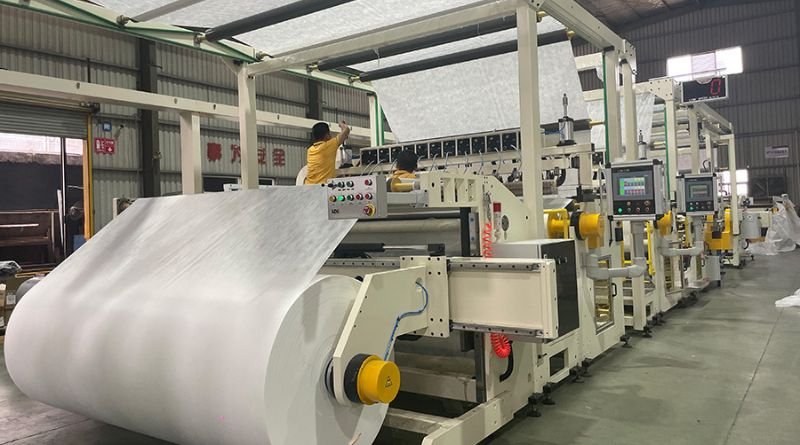
As industries strive for more intelligent manufacturing, industrial adhesives are undergoing rapid transformation. The emergence of bio-based solutions, innovative materials, and automation is fundamentally reshaping how adhesives are made and used. This surge of innovation is meeting the rising expectation for both high performance and environmental responsibility. For organizations seeking top-performing solutions, leveraging a reliable industrial strength adhesive is now just the beginning of the transformation.
Advances in adhesive technology are responding to global trends such as climate action, regulatory shifts, and the need for greater efficiency in production lines. Today’s manufacturers are not only seeking performance but also safer materials and more sustainable processes. The following overview captures the main trends currently fueling change in the adhesives market and highlights the new, broader capabilities manufacturers can now access.
Surge in Bio-Based and Eco-Friendly Adhesives
Governments worldwide have introduced more stringent regulatory frameworks, directly influencing the production and formulation of industrial adhesives. One significant result has been the rapid adoption of adhesives made from renewable resources, such as plant oils, resins, and starch-based components. These bio-based adhesives can significantly lower volatile organic compound (VOC) emissions, making them safer for both workers and the environment. Leading chemical companies are bringing a wave of sustainable adhesive products to market, exemplified by Henkel’s Loctite bio-based polyurethane adhesives, which contain over 50% renewable content. By targeting markets like automotive and footwear, these products not only help meet regulatory standards but also appeal to environmentally conscious businesses and consumers.
This trend underscores a wider push across manufacturing sectors for transparency in sourcing and reductions in carbon footprints. With bio-based adhesives, companies are able to market both high-performance and eco-friendly credentials, a combination that appeals strongly in competitive industries. Major reports from outlets such as Chemistry World highlight bio-based materials as the dominant growth driver for the sector in the foreseeable future.
Emergence of Smart Adhesives
Smart adhesives are at the cutting edge of material science innovation. Their unique ability to sense stress, detect damage, and, in some cases, self-heal is changing expectations across industries such as aerospace, automotive, and electronics. These adhesives often contain embedded microcapsules or special polymers that activate repair mechanisms automatically when structural integrity is compromised. By preventing crack propagation and minimizing maintenance, innovative adhesives deliver longer-lasting, safer assemblies.
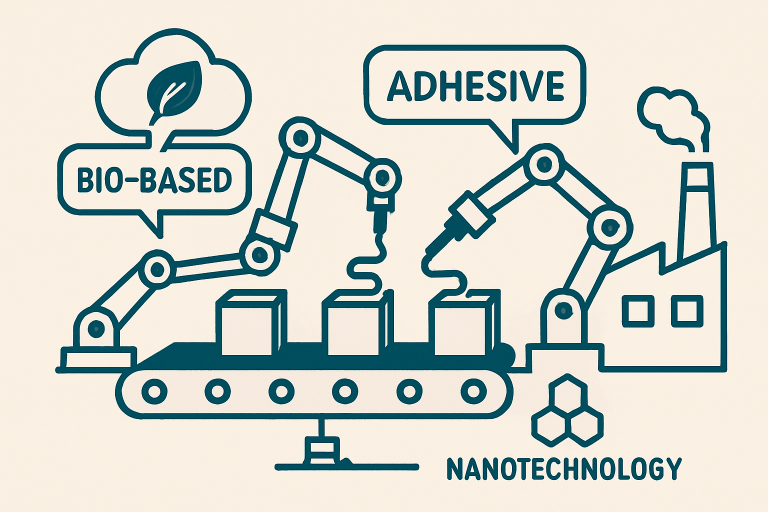
Another area of advancement is adhesives integrated with sensor technology. These allow real-time monitoring of joint conditions, enabling predictive maintenance and reducing the cost of unexpected failures. Given the high value placed on both safety and uptime in sectors such as aviation and electronics, the adoption of smart adhesives is expected to accelerate rapidly.
Automation in Adhesive Application
The transition from manual to automated adhesive application is revolutionizing factory operations. Companies increasingly rely on robots and advanced dispensing systems to ensure precise, repeatable, and contamination-free adhesive application. An excellent illustration of this is the ShurSEAL® Packaging Solution by Shurtape, which maximizes wipe-down efficiency while minimizing tape waste during package sealing. Through automation, manufacturers improve consistency and gain tighter control over material usage, resulting in direct cost savings and fewer product rejects.
Additionally, automation contributes meaningfully to workplace safety by reducing human exposure to potentially hazardous materials. As outlined in Packaging Digest, integrating robotics into adhesive workflows yields measurable gains not only in productivity but also in worker health.
Development of High-Performance Adhesives
As industries continue to advance, demand for adhesives that can withstand increasingly challenging conditions has soared. High-performance adhesives are now engineered to offer exceptional bonding strength, durability, and resistance to a wide range of conditions, from extreme temperatures to aggressive chemicals. This is especially crucial for applications in aerospace, automotive, and microelectronics, where materials are regularly subjected to thermal cycling, abrasion, and exposure to corrosive substances.
Engineers are tailoring novel formulas to meet unique demands, enabling lighter, stronger, and more complex assemblies. For instance, advancements in polymer chemistry allow adhesives to maintain flexibility at sub-zero temperatures while still withstanding extreme heat and chemical exposure, capabilities that traditional fasteners cannot provide.
Advancements in Nanotechnology-Infused Adhesives
An exciting field driving adhesive innovation is nanotechnology. Nanoparticles, such as nanosilicas and carbon nanotubes, enhance adhesives by forming chemical bonds at the nanoscale. This results in improved strength, flexibility, and durability, while also allowing for bonding between otherwise incompatible materials. Industries such as aerospace and next-generation electronics are at the forefront of adopting these high-performance adhesives, reaping the benefits of lighter components and greater assembly reliability.
Additionally, nanotechnology-based innovations offer greater flexibility for customized formulations. Researchers can tailor adhesive properties to combat electrical, thermal, or mechanical stresses, pushing the boundaries of what is possible in product design.
Focus on Sustainability and Circular Economy
Many players in the adhesive market are now adopting approaches that support a circular economy. This includes utilizing ISCC-certified mass-balance accounting and renewable carbon sourcing to reduce verified carbon footprints. In addition, manufacturers are focused on creating adhesives that are easier to recycle, can be broken down during material recovery, and have end-of-life profiles that align with sustainable objectives. These practices not only reflect growing regulatory and stakeholder expectations but also provide manufacturers with meaningful differentiation in increasingly crowded markets.
Conclusion
The expansion of bio-based solutions, introduction of smart materials, advancements in automation, and integration of nanotechnology mark an era of substantial change for industrial adhesives. More manufacturers are investing in products that balance performance with environmental stewardship. Innovative adhesives are now pivotal in helping companies meet performance targets, safety standards, and sustainability commitments. For those in manufacturing and engineering, understanding and leveraging these trends provides a clear path to competitive advantage as the industry continues to evolve.