
Key Takeaways
- Refined coastal style should feel calm, comfortable, and personal rather than overly themed.
- A layered palette of warm neutrals, muted blue, soft green, and natural wood suits Newport Beach light.
- Natural materials keep pale interiors from feeling flat or overly formal.
- Furniture placement should support easy movement, conversation, and everyday entertaining.
- Indoor and outdoor spaces feel more connected when they share colors, textures, and lighting.
- Durable finishes and easy-care fabrics make polished rooms more practical near the coast.
In Newport Beach, California, a refined coastal home is less about filling rooms with nautical décor and more about creating an atmosphere that feels open, comfortable, and ready for daily life. Thoughtful pieces of High end furniture in Newport Beach, CA can help establish that balance, especially when comfort, proportion, and material quality lead the design. The local setting offers plenty of inspiration. Newport Beach includes waterfront neighborhoods, beach communities, and hillside areas, so that a successful interior can take cues from sand, water, soft morning light, weathered wood, and the easy movement between indoor rooms and patios.
Modern coastal design does not require a large oceanfront house. It can work in a Balboa Peninsula cottage, a Corona del Mar condominium, a Newport Coast home, or an apartment farther inland. The goal is to respond to the space’s scale, lighting, and routines rather than copy a fixed showroom look. Start by deciding how the room needs to function. A living room may need to host weekend guests, provide a quiet place to read, and connect visually to a terrace. When those needs are clear, the decorative decisions become simpler and more useful. For homeowners who want a polished foundation without losing the laid-back character of the coast, selecting luxury furniture in Newport Beach, CA, can be an effective place to begin. Choose fewer substantial pieces, then build warmth through texture, lighting, and personal details.
What Refined Coastal Style Looks Like in Newport Beach
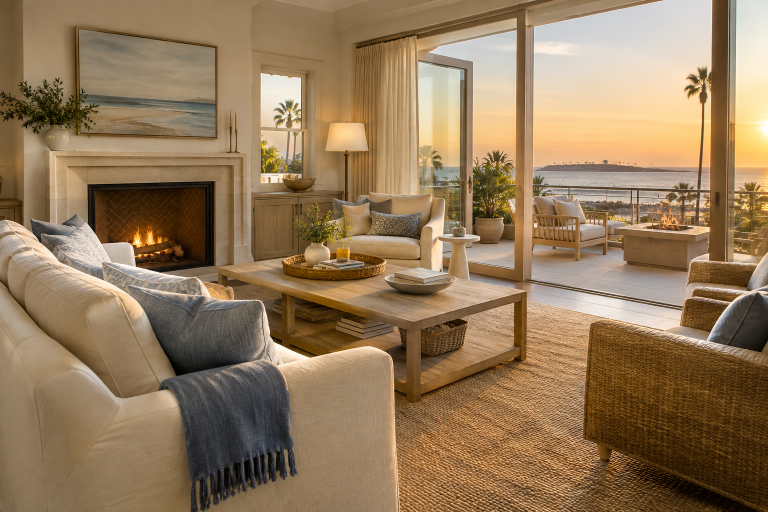
Refined coastal style is defined by feeling, not symbols. It favors breathable rooms, clean-lined silhouettes, inviting upholstery, and accessories chosen with restraint. Instead of anchors, shells, and overt beach signage in every corner, let the coastal influence appear through natural finishes, soft colors, daylight, and relaxed proportions. Look for furniture with comfortable seat depths, tailored cushions, and shapes that do not overwhelm the room. Add simple art, ceramic objects, woven accents, and greenery selectively. The finished home should feel collected over time, not decorated all at once.
Build a Calm, Flexible Color Palette
A neutral base gives a Newport Beach interior longevity. Warm white, ivory, pale taupe, light sand, and soft gray work well on major surfaces because they make it easier to update pillows, art, and smaller accessories later.
A Simple Color Formula
- Base colors: Warm white, ivory, pale beige, or quiet gray.
- Secondary colors: Faded blue, eucalyptus green, soft clay, or misty charcoal.
- Grounding accents: Natural oak, walnut, woven tan, aged bronze, or deep navy.
Test paint and fabric samples in the room before committing. Coastal light can look different in the morning, afternoon, and evening, while window orientation and nearby landscaping can also affect how a color reads. Small variations in tone add dimension without disturbing the calm mood.
Layer Natural Materials and Texture
When the palette is intentionally quiet, texture becomes essential. Linen curtains, woven rugs, wood tables, cotton upholstery, ceramic vessels, stone surfaces, and cane details give a room visual depth without adding clutter.
Try pairing a soft upholstered sofa with a handwoven rug, a smooth ceramic lamp, and a substantial wood coffee table. In a dining space, woven-seat chairs can soften the look of a clean-lined table. The contrast between tactile and smooth surfaces makes a room feel finished while preserving its relaxed character.
Choose Furniture for Comfort and Flow
Beautiful furniture still needs to make daily movement easy. Measure the room, doorways, hallways, and stair turns before ordering large pieces. Then identify the natural paths between entries, kitchen areas, windows, and outdoor doors.
Planning Steps
- Place the largest seating piece first.
- Build a conversation with chairs or a second sofa facing inward.
- Keep walkways open around tables and seating.
- Use rugs to define gathering areas in larger rooms.
- Choose side tables and lamps that are within easy reach.
A room does not need every piece against a wall. Floating seating closer together often creates a more welcoming arrangement, particularly in open living areas where a large footprint can otherwise feel scattered.
Connect Indoor and Outdoor Living Areas
Patios, balconies, courtyards, and covered outdoor rooms are part of the Newport Beach lifestyle. Create continuity by repeating one or two colors, wood tones, woven finishes, or metal accents on both sides of the door. A pale blue pillow indoors, for example, can be echoed in weather-appropriate outdoor cushions. Keep the connection practical and visual. Position outdoor dining near the kitchen when possible, create shade for lounging, and use durable rugs or textiles designed for their intended environment. Clear sight lines through doors and windows can make even a modest outdoor area feel like part of the home.
Use Lighting to Shape the Mood
Lighting determines whether a pale coastal room feels welcoming or stark. Use layers rather than relying on one bright overhead fixture: ambient light for the room, task light for reading or cooking, and accent light for artwork, shelves, or architectural details. Table lamps and floor lamps bring warmth to evening gatherings, while dimmers make it easier to adjust the mood as daylight changes. For remodels involving permanent fixtures or controls, the California Energy Commission’s residential lighting guidance provides useful context for planning efficient lighting systems.
Balance Style With Everyday Durability
A relaxed home should be easy to live in. Consider performance upholstery for frequently used seating, washable covers where appropriate, sealed surfaces for dining and outdoor areas, and finishes that suit the household’s actual habits. Materials exposed to strong sun, sandy feet, pets, or frequent entertaining should be selected with care. Before buying, ask whether the fabric can be cleaned easily, whether the finish will show water marks, whether replacement cushions are available, and whether the piece can work in another layout later. Practical answers protect both the look of the room and the investment behind it.
Common Coastal Design Mistakes to Avoid
- Using too many beach symbols: Let materials and color suggest the coast instead.
- Making everything white: Add wood, woven fibers, and darker accents for contrast.
- Matching every item: A mix of complementary finishes feels more natural.
- Ignoring scale: Small décor can disappear in an expansive room.
- Choosing appearance over comfort: Seating should work for real conversations and long evenings.
A Simple Room-by-Room Checklist
Living Room
- Create a comfortable conversation area.
- Use one grounding rug and varied textures.
- Keep circulation paths clear.
Bedroom
- Use a restful palette and layered bedding.
- Add bedside reading lights.
- Choose window coverings that provide privacy and light control.
Outdoor Area
- Define dining, lounging, and movement zones.
- Provide shade and evening lighting.
- Repeat at least one interior material or color outdoors.
Frequently Asked Questions
Can Coastal Style Work Away From the Water?
Yes. Coastal style relies on comfort, natural materials, light, and a calm palette, not a waterfront address.
Does a Coastal Home Have to Use Blue?
No. Soft greens, warm neutrals, clay tones, pale gray, and natural wood can create the same relaxed effect.
What Is the Best First Update for a Dated Room?
Begin with layout and lighting. Those changes can improve function immediately, then rugs, window treatments, and upholstery can follow as the budget allows.
Conclusion
A refined Newport Beach coastal home is built through thoughtful choices rather than a strict decorating formula. Prioritize comfortable layouts, calm colors, natural textures, flexible lighting, and durable materials that support both everyday routines and occasional entertaining. Consider how people move through the room, where they naturally sit, and how furniture can encourage conversation without making the space feel crowded. Soft textiles, wood tones, woven accents, and subtle coastal details can add warmth without relying on an overly themed look. Lighting should also be adaptable, with a mix of natural light, ambient fixtures, and task lighting to create different moods throughout the day. Durable, easy-to-maintain materials can make the home more practical while still supporting a polished appearance. The result can feel polished enough for entertaining while remaining easy, warm, and fully suited to everyday coastal California living, creating a space that feels connected to its surroundings without sacrificing comfort or function.